The Pictet Asset Management fixed income trading team is a well of insight, experience, and reputability. Spread across four desks in two continents: London, Geneva, Hong Kong and Singapore, its 15-member team boasts a combined 250 years of experience and counting.
 The desk is led by PAM’s co-heads of fixed income trading, James Frew and Patrice Guesnet – both industry stalwarts and based out of London and Geneva respectively. The duo took up the reigns in 2022, and since then the team has gone from strength to strength.
Over the years, PAM has evolved from its roots as a boutique, strategy-specific trading setup into a semi-centralised platform. Currently, the Pictet Group’s AUM is at $893 billion, with the asset management arm managing $333 billion.
On a notional basis, the team trades more than $500 billion a year in fixed income, some 90,000 trades. Speaking to how they balance the leadership of the team, Frew and Guesnet explain: “While co-heading can sometimes be seen as challenging, for us it has felt entirely natural. We bring different but complementary skill sets to the table, which allows us to advance the desk more effectively and adapt to new challenges as a team.
“This structure also means that both of us remain actively involved in the business, while jointly managing and developing the team.”
Guesnet’s trading career began in FX sales before expanding into FX and emerging market rates, an atmosphere which he describes as “fast paced, demanding, and at times quite unforgiving, but also full of energy and teamwork”.
When he landed at PAM in 2012, Guesnet explains that much of the workflow was still manual and regulatory changes like Mifid II were close on the horizon. It was here that Guesnet’s interest in automation and using technology to enhance both individual and team performance were born.
For Frew, his career began as an assistant swaps trader in 1993 before making his way through the sales environment in the subsequent years.
He credits this experience with building a strong foundation in market engagement, client management, and relationship building.
As Frew explains: “In 2015, I moved to the buy-side and joined PAM, a client I had covered since 2009. This move was rooted in trust and longstanding partnerships – values that have guided my career at every stage. Whether working on the trading floor of an investment bank or on the investment floor of an asset manager, I have always viewed finance as a people-driven business.
“One’s professional journey is often intertwined with one’s personal journey; my journey has been challenging and rewarding, underscored by purpose, resilience, and pride in building trusted relationships across the industry.”
Both co-heads make sure to imbue their desk with those very principles, and together have made sure to keep their fingers on the pulse whilst finding time to cultivate the continued progress of the desk.
“Pictet benefits from a longstanding reputation for excellence, and within fixed income our strength lies in experience, professionalism, and structure,” adds Guesnet.
One unified group
Whilst the PAM fixed income desk is spread across bases in both Europe and APAC, one of the overarching focuses for co-heads Frew and Guesnet is to foster a team which operates as a cohesive group.
As Frew explains: “While in the past we worked through differing personalities and localised approaches, today the desk operates as a unified group across four locations. The combination of strong connectivity, mutual respect, and rigorous professionalism allows us to leverage collective expertise and deliver best-in-class execution for clients.”
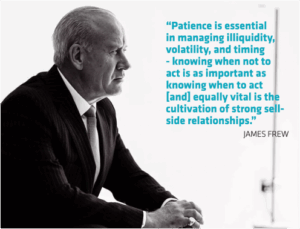 For the co-heads, the majority of their time remains trading on the desk – whilst Guesnet is focused on EM macro products with a bias toward Latin America and frontier markets, Frew trades Latin American hard currency and US/European distressed credit.
For Frew, whose career has been centred on credit from the beginning, the sector he focuses on is at the less liquid end of the credit spectrum, with success dependent on anticipating liquidity, monitoring axes and flows, and maintaining continuous dialogue with counterparties.
“Patience is key when it comes to trades in this area of fixed income, as positions can remain live for days before liquidity emerges,” explains Frew.
The importance of both co-heads maintaining an active role in the trading and execution side of the desk is clear to see, with a hands-on approach lending itself to a keen eye for the details.
Guesnet explains: “This daily involvement is critical as it helps to stay in touch with our traders’ day-to-day reality while at the same time being engaged with our portfolio managers, our brokers and market technology providers. It’s a dynamic that has strengthened our ability to innovate and respond to the evolving needs of our clients and the market.”
Whilst both Frew and Guesnet spend around 80% of their time trading, the remaining 20% is dedicated to managing the team.
Specifically, the team trades all asset classes within fixed income and each trader or pair of traders own their asset class, explain the co-heads, adding that the desk continually coordinates with portfolio managers, compliance, operations, client onboarding teams, technology partners, and senior leadership.
Frew and Guesnet add that their approach differs from a light-touch management style – for senior colleagues, to a more hands-on approach when it comes to junior traders.
Speaking to the trading team’s dynamic specifically, Guesnet enthuses: “We are supported by a great team of both highly experienced traders, that brings a lot know-how, and younger ones that come from a more tech-oriented mindset.
“Although no two days are alike, the common threads of execution excellence, risk management, and strategic oversight ensure that we remain both reactive and proactive in shaping our team’s success.”
Also important for the co-heads is a robust backup network which they stress is vital to the work being done. Specifically, this refers to having complete confidence in designated backup team members in order to ensure business continuity.
“In my case, my trusted backup is Mark Parmar [senior credit trader at PAM] whom I have maintained a professional relationship for 20 years,” asserts Frew.
“We have collaborated in various capacities, including as a client, colleagues in two firms, and as a referral when he was recruited by another firm. Our entire team operates with this structured backup approach, underscoring organisational resilience and reliability.”
Indeed, when it comes to ensuring the desk’s longevity and continued success, a well-rounded, balanced approach is decidedly key for both Frew and Guesnet.
Sharing their perspective on what makes for the best performance on an individual level, both are in agreement that the strongest traders combine technical ability with humility, adaptability, judgment, and relationship management.
“At Pictet, we benefit from a diverse mix of backgrounds: some traders with deep sell-side experience, others homegrown within Pictet, and several with advanced technology and coding expertise. This blend allows us to approach markets holistically.”
In this vein, sell-side experience is valued particularly highly at PAM, and is sought out for the way the knowledge gleaned from that world lends itself to a broad view of the markets.
As Frew highlights, “it fosters an appreciation for how liquidity and relationships are managed, which remains invaluable on the buy-side.
“The ability to balance portfolio manager objectives with productive counterpart relationships is often the differentiating factor between a good trade and a great one.”
Innovation at the fore
The desk is clear that one of its key advantages is its blend of deep asset-class expertise – thanks to the insights of more seasoned traders – coupled with the younger generation’s technological fluency.
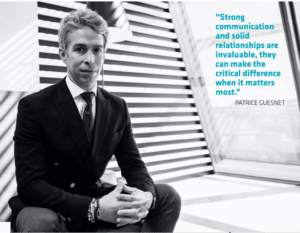 “This enables portfolio managers to benefit from both market expertise and execution consistency, while external counterparties can better understand our flows. This structure improves collaboration, reduces silos and creates clearer engagement,” assert Frew and Guesnet.
Of course, as the fixed income sphere continues its march towards increased electronification, the benefits of having technological fluency on the desk is only set to become even more vital.
However, both co-heads make clear that a measured approach is necessary when it comes to growth and modernisation, explaining that “innovation must be purposeful: simplifying processes, streamlining workflows, and adding measurable value”.
Expanding on this, Frew highlights that there are particular areas within the fixed income sphere which would benefit from closer attention – namely, that of the credit new issue market.
“Here, legacy inefficiencies remain widespread. I have experience from both the sell- and buy-side perspectives and little has changed in what is a pretty painful part of the market.
“For years, sales have fought each other for allocations, syndicate managers have been harangued by sales for more bonds and sales credits, portfolio managers or buy-side traders have had a good yell at sales or syndicate. Occasionally trading lines have been pulled.”
He tells The TRADE that over the last year, Pictet has developed a workflow which integrates Bloomberg PREL, Interop, CRD and TSOX in order to capture, monitor, and process orders digitally from inception through compliance checks, order transmission and ultimately to allocation.
Through this, manual intervention has been reduced, as well as enhancing transparency, and creating a scalable workflow aligned with compliance and operational teams.
Importantly, Frew explains that the goal in the end is to help promote and extend this framework further, with the support from global industry partners, adding that of course the sell-side can also play a part, suggesting that they also join the negotiation table.
Guesnet agrees that integrating data and technology into the workflows is essential for optimising trade execution, highlighting several priorities when it comes to growth and innovation.
“By employing advanced execution algorithms and real-time analytics, we empower our traders to make informed decisions, regardless of the trade size. This approach enables thorough analysis to determine the most suitable brokers, timing, and strategy.
“We incorporate a blend of macroeconomic data, significant events, behavioural biases, market flows, and trading axes to guide our traders, providing clarity on whether to execute a trade now, in five minutes, an hour, or even in two days. While this framework works for all trades, it offers enhanced insights for larger, less liquid transactions.”
Notably, the co-heads explain that the aim for the desk is of course to add tangible value to the fund, but also to foster constructive discussions between traders, fund managers, and brokers.
Elsewhere, the topics of data and related innovations – including artificial intelligence – are also front of mind for the desk at present.
Discussing exactly why these are such dominant themes, Frew and Guesnet explain that this is “particularly in terms of maximising the value of [our] internal datasets in relation to third-party offerings and harnessing AI to extract meaningful insights and efficiency gains”.
They add: “Because every asset manager’s needs are distinct, there is no universal solution, and budget realities require us to be thoughtful in how we leverage and share data. ‘Give-to-get’ data arrangements are a recurring discussion point, but that data has to be useful for decision-making and execution.”
When the discussion moves to the desk’s empirical approach to trading, the co-heads explain how they are ensuring PAM remains ahead of the curve, positioning themselves for continued success in the evolving market.
One key area for the duo is best execution, an area in which both Frew and Guesnet stress that the team is “extremely thorough”.
“We have four levels of check: trader, desk head, co-head, compliance. This is done weekly. We follow this up with a quarterly best execution committee with random extracts demonstrating our oversight.”
Demonstrably, the desk is leaving no stone unturned, and this is also true of their approach to broker reviews – the duo explain that these are conducted via Tableau “with a focus on quantitative and qualitative granularity – widely regarded as one of the strongest review processes in our peer group.
“This approach fosters more meaningful conversations that ultimately strengthen our relationships with our top brokers.”
Elsewhere, the co-heads also highlight automation and the implementation of SimCorp as key focal points, explaining that PAM uses both vendor solutions and its own proprietary systems, continually aiming to refine aspects such as: trade sizing, timing, and broker selection through the use of AI-driven insights.
Specifically, the team leverages Interop.io to develop tools that support traders in their day-to-day operations and improve analytics, and SimCorp’s role as a strategic initiative “impacts the entire business from front to back, streamlining processes and future-proofing our technology stack,” add Frew and Guesnet.
The critical difference
Taking a look at the other side of the coin – the co-heads are quick to point out that when it comes to the desk’s dynamic, it is an approach which places the traders themselves at the fore.
As Guesnet asserts: “Strong communication and solid relationships are invaluable, they can make the critical difference when it matters most.”
Though both co-heads concede that trading will continue to move towards greater digitisation and automation, they maintain that human side of things will remain extremely valuable in the future.
“Today in credit, the 10 – 100 million tickets are still very much bilateral or voice traded, and this won’t disappear any time soon. Yes, efficiency and transparency will improve with faster data prints, but it risks eroding the interpersonal dimension of market engagement – the instinctive read of tone, conviction, or urgency that comes through voice interaction.”
“While technology will empower traders with more data and streamlined workflows, the art of relationship-building and real-time negotiation may diminish. The challenge for the next generation will be balancing digital efficiency with the human connectivity that has historically underpinned effective markets.”
 In the same vein, Frew adds that the two most important lessons which stand out when reflecting on his career thus far relate to exactly those personal skills, specifically patience and relationships.
“Patience is essential in managing illiquidity, volatility, and timing – knowing when not to act is as important as knowing when to act [and] equally vital is the cultivation of strong sell-side relationships. Liquidity can evaporate in times of stress, and it is during crises that trusted relationships prove their worth.”
Evidently both Frew and Guesnet have their fingers firmly on the pulse of their sphere, both committed to continuing to foster Pictet AM’s highly collaborative culture, embracing oncoming innovation and continuing to prioritise the high level of industry insight at their disposal.
The co-heads’ leadership philosophy, built on transparency and partnership, with “no rivalry, no silos, and open communication,” looks set to continue to be a successful one.
As Frew attests: “The trick is trust – we are joined at the hip as HR inform us and this co-head structure is one that is promoted […] we complement each other’s strengths both professionally and personally, and that cohesion cascades across our global team.”
Access the full e-version of the Q3 2025 magazine edition here.