At Rothschild & Co, a large part of our job as an agency broker-dealer is to make sense of an increasingly fragmented US equity market on behalf of the buy-side. Nowhere is this more valuable than in non-displayed midpoint liquidity, where the quality of an interaction can matter as much as the quantity of liquidity a venue provides.

Tom Dixey
The challenge our clients describe to us is a constant: capturing as much liquidity as possible while minimising market impact. What has changed is the ability to manage that trade-off with far greater precision, provided you know how to route effectively.
To help clients navigate this, we recently hosted three of the most innovative US trading venues, IEX, OneChronos, and XTX, to explain how each genuinely differs, how the buy-side should configure routing, and to highlight what is coming next.
One theme ran consistently through the discussion, and it is the one traders should hold onto: the venues most worth directing flow to are those whose matching protocols are designed to reduce market impact, by curbing the advantage of speed-sensitive participants and increasing the likelihood that orders interact with natural liquidity.
That matters because our clients are investors, not short-horizon traders: they want to build or exit positions with minimal signaling. Executing an investor’s order against another investor, rather than a latency-sensitive counterparty positioned to react to it, is what we believe supports best execution. Each venue we hosted pursues that outcome through a different structural mechanism.
Three routes to the midpoint
IEX (represented by Stefan Parker) is a national securities exchange focused on displayed and non-displayed trading and the technology designed to enhance performance and help protect against adverse selection.
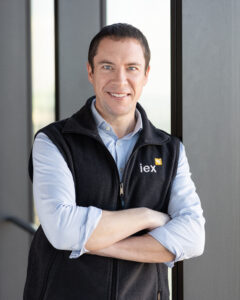
Stefan Parker
In recent months, IEX’s non-displayed volume alone has exceeded the dark volume of any dark pool in the US. Its speed bump applies across all order types, enabling pegged orders to use the most current pricing and helping reduce latency arbitrage. In addition, certain order types use IEX’s proprietary signal, designed to “fire” when the signal identifies a quote as unstable or “crumbling.”
The D-Peg order type trades more than 90% at the midpoint while leaving room for price improvement, and steps out of the market when the signal fires. Its core technology, (i.e., the speed bump and signal) are designed to blunt the advantage of participants trading on faster information; As Stefan described, IEX positions itself as a strong destination for institutional flow after brokers’ own pools.
OneChronos (Matt Stephens) runs a “smart market” of periodic auctions whose mechanism is designed to compete on price improvement. Batching interest into auctions reduces the value of arriving first, while its combinatorial design lets traders submit expressive bidding orders and conditional indications for more discreet trading. Accessible only through broker-dealer subscribers, it has garnered buy-side and sell-side support and recently broke into the top 10 US ATSs by shares traded in NMS stocks in Q2 2026, per FINRA’s published ATS data. It highlights markouts as a clear and interpretable measure of execution quality.
XTX (Ansh Desai) is an algorithmic trading firm that supplies low-impact liquidity by holding risk for meaningful periods, active in small and mid-cap names in large size, both bilateral and on-exchange. It offers persistent midpoint interest and is highly transparent, sharing hedging speeds, markout horizons and its trading universe. Because it holds risk, its liquidity behaves more like a natural counterparty than an opportunistic one.
What actually reduces market impact?
When we asked what separates higher-quality midpoint interaction, the panel was broadly in agreement: it comes down to concealing your footprint by interacting with natural contra liquidity rather than exposing your intentions. Crucially, a “clean venue” is not a badge a venue wears; it is an outcome, judged through markouts, quote stability and parent-level performance, and it is client-specific. A configuration that minimises impact for one order profile may not for another.
This is where the broker’s role becomes central, and where we focus much of our energy. We don’t view any venue as inherently toxic: the work is understanding which venues, for which flow, produce the best measured outcomes, and allocating the right order to the right place at the right time.
It is precisely this understanding of market microstructure that we build into our algorithms at Rothschild & Co, engineering them to prioritise price stability and natural liquidity capture so impact is reduced order by order. There was unanimous agreement that brokers with flexible technology stacks are best positioned to do this well, because they can access a broader data set, conduct experiments, and adapt as venues evolve.
What the buy-side should be asking
That points to a simple message for traders: lean on your broker. Ask for parent-level statistics and review, not just child-order fills. Ask how your flow is being segmented and curated. And ask about newer tools: OneChronos supports conditional indications and IEX has launched an ultra-passive D-Peg focused on fill quality.
The discussion we found most useful concerned minimum quantities (MEQ). Many clients apply a single, flat MEQ across every venue. We asked whether MEQ should instead be set venue by venue, based on each venue’s characteristics and performance, as we do. That way you still pursue large midpoint executions without forgoing smaller, high-quality ones on venues whose protocols already keep impact low, managing the liquidity-versus-impact trade-off more effectively.
OneChronos argued that orders sent with limited to no minimum quantity can be warranted on its venue. To provide a data point, OneChronos observed that across all subscribers in Q2 2026, on midpoint day and IOC orders of 100 shares or more, it saw no material difference in how often the NBBO midpoint moved in the second after a fill, whether or not a minimum quantity was applied. IEX also noted the odd-lot market has changed beyond recognition: 92% of odd-lot orders are now institutional flow sliced thinly by benchmark algos “hugging” the curve, rather than market-maker activity.
As Stefan Parker of IEX noted: “The shifts we’ve seen in odd-lot trading mean size alone is becoming a less useful proxy for counterparty type. Understanding how a venue’s market design shapes interactions can be just as important when deciding how to configure minimum quantities.”
XTX, however, noted that they are more interested in a client’s profile of flow than sizing requirements and can specifically accommodate different styles of flow bilaterally. The takeaway: segmentation by venue and flow type matters more than raw size, another argument for curation over one-size-fits-all rules.
Where this is heading
The pace of change is not slowing. OneChronos has launched US pre-market trading from 7am ET and through affiliates, UK and European venues, with Japan and US rates targeted for 2027, subject to the required regulatory approvals. IEX has options and an update to its D-Peg signal is coming. Meanwhile XTX continues to focus efforts on client outreach, expanding its US equities liquidity provision.
The structural backdrop is striking: over 50% of US volume now prints off-exchange (reported by FINRA’s TRF), if you add another 20% of volume that is hidden on-exchange, that equates to approximately 70% of US equity volumes that are trading away from displayed lit markets. All three venues agreed that the SEC’s proposed rescission of Rule 611 (Order Protection Rule) could accelerate that shift further.
For the buy-side, the takeaway is clear. Midpoint liquidity has never been deeper or more varied, but capturing it cleanly, without leaking intent, depends on curation. Done well, curation tilts the age-old liquidity-versus-impact trade-off back in your favor. That is the work we do every day at Rothschild & Co: understanding each venue in depth, building that knowledge into how our algorithms route, and turning a fragmented landscape into clean, high-quality executions.