With data widely recognised across many parts of capital markets as the ‘golden source’ to success, this also rings true for the FX swaps, where neutral, independent data is more important than ever.
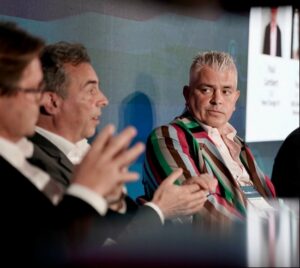
Paul Lambert, Ian Packer, Richard Turner
For panellists speaking at TradeTech FX on Wednesday, the most pertinent problem facing the swaps market is transparency, and a lack of independent data has slowed automation, increasing the need for manual trader involvement to interpret genuine market views.
For Paul Lambert, chief executive of New Change FX, data and information in this market is on a positive development arc, yet human intervention still plays a dominant role.
“The flow of information to you in FX swaps if you’re on the buy-side has improved markedly, but you still get given a picture – which is your view of the market – as if someone has given you a pair of glasses to distort it, that doesn’t allow you to look clearly at where the whole market is.”
He also added: “That means that you need a lot of human intervention from professionals to see where the market is. And once you’ve got human intervention, then you’re slowing down the process.”
In a similar vein, Ian Packer, FX trader at UBS Asset Management, highlighted the importance of data in shedding the light on the FX swaps market, and supporting both buy-side firms and banks in discovering where the true appetite for this product lies.
Explaining this, he asserted: “It’s not about FX swaps being harder to execute, it’s just knowing how to execute them. It’s just different than spot, and you’ve got to know whether the appetite is there from the bank. To do that, having better data is really the crux of the difference.”
Manual processes remain relevant
The ‘appetite from the bank’ sentiment is also a key factor that plays into the persistence of manual processes within the FX swaps market.
Specifically, as Richard Turner, senior trader at Insight Investment indicates, some banks lack the electronified pricing systems needed for automated execution, with consistent trade flow and profitability valued over loss-leading deals.
Read more – Sell-side stuck at a crossroad between manual processes and dominating automation
Commenting on when FX traders intervene manually in these instances, Turner said: “When we do sizable swaps, we have to do things manually because the banks that we face haven’t got sophisticated enough systems whereby they can accurately price in an electronified manner.
“So in my view, we would like to automate things, but I think you’ve got to do them in a very piecemeal manner. Start off small and introduce larger sizes slowly.”
‘All fair in love and war’
Building on this, the importance of relationships also ties into the manual nature of some of the FX swaps market, in particular when a larger trade arises.
As noted by the panel, electronic platforms often execute smaller sizes with tight spreads efficiently, but in some instances, larger trades may exceed a bank’s willingness to stream prices electronically, bringing in the need for voice negotiation.
Within this, the importance of establishing trusted relationships come into play, and as Turner stated, “it’s all fair and love and war but it’s really a two-way trust thing. Our job is to optimise that and be fair and transparent about what we’re doing.”
Similarly, Packer also echoed this, indicating that the cut-off between electronic and voice-based execution is growing as electronic liquidity improves, however this remains size dependent.
He added: “When it goes beyond the sort of size where a bank is willing to stream it, then it’s probably the right time to go to voice, because they’re not naturally getting rid of the risk of an e-platform.”