The latest structural developments in FX markets are having a real effect on both execution and operations, agreed experts speaking at TradeTechFX US, with market structure change demonstrably impacting the entire trading lifecycle, from pre- to post-trade.
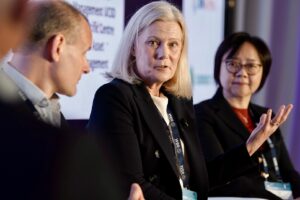 Yan Pu, global head of foreign exchange at Vanguard, explained that among this, one of the key priorities from the buy-side perspective is the pursuit of uninterrupted liquidity.
“A lot of time we focus on the trade which is the pricing discovery, so what we want is transparency in the pricing discovery mechanism and at the same time to also have abundant liquidity providers to come in to provide the liquidity – and ideally that is uninterrupted liquidity,” she said.
The importance of avoiding gaps, Pu explained, is paramount, with gap risk a principal factor and the pursuit of liquidity uninterrupted in different time zones, across different countries front of mind.
“We already see that more and more liquidity providers come in with the traditional dealers and non-bank financial institutions and with the formation of the ECN and with a lot of algos then we are able to achieve the liquidity that we want and a compressed spread in the spot market. So this is a big win for the buy-side firms and then for asset managers.
Furthermore, when it comes to the swaps market this was also highlighted as an area where future innovation would be welcomed, added Pu.
“A large part of our trading volume is on swaps and the swap need is increasing […] in the forward market there is not a streaming service being provided yet, and even when we’re talking about the forwards reference rate, it’s not necessarily transparent and readily available out there. So that’s something that we would love to see in the future.”
Equal footing
Conversation, inevitably, also turned to the importance and relevance of the FX Global Code, with panellists agreeing on the continuing importance of industry collaboration in facilitating market development, particularly in light of the potential for extreme market volatility in the future.
Anna Nordstrom, head of markets group, Federal Reserve Bank of New York, explained that a fair market is one which is effective and efficient for everybody that participates, adding that transparency is important for all to feel they are on equal footing.
“What is really important for us is that the code is taken up across the industry. We have been quite successful in working with – and promoting in – the traditional bank dealer space. But, on the buy-side, as it’s so diverse and there are such different types of participants. We are working hard to promote uptake among asset managers, corporates and hedge funds.
“The code is only as successful as the number of participants that follow the code.”
Read more: FX Global Code revisions get green light from participants
Jeremy Smart, head of sales, XTX Markets, echoed this sentiment, further iterating the significance of the code in retaining the invaluable benefit of remaining a self-regulated market.
“The reality is there are trading groups at firms that have not signed the code as of yet […] The price of self-regulation is incredible and the risk to losing that is really just a price not worth paying.”
He added: “It’s just so important that the code is successful and adapts for the future because it’s going to get way more complicated. The next real major crisis, is going to be the one that tips us over the edge into being fully regulated, so it’s a prize not worth giving away.”